ADHD: the myth? I took a third way - and it got me to Cambridge
A new Channel 4 documentary has reignited the row over ADHD medication. I have ADHD tendencies too, and like the doctor presenting the programme I found another route: strategies, not just prescriptions. Here's my story - and why I think there has to be a third way for our kids.
I sat down to watch Channel 4's 'ADHD: The Myth?' with more than usual interest. The presenter, Dr Max Pemberton, is a psychiatrist, a best-selling author and a very successful newspaper columnist - and during the programme he revealed that he has ADHD himself. Watching a man who has achieved everything he has talk openly about the condition felt like looking in a mirror, because I have ADHD tendencies too.
Pemberton's argument - and it is a provocative one - is that we've swapped one blunt instrument for another. Children who once would have been caned, belted or humiliated in front of the class are now, he suggests, being handed a chemical cosh instead: Ritalin, or an amphetamine, prescribed to make a restless child manageable rather than to actually solve anything. Whatever you think of the documentary (and it has attracted serious criticism from the Royal College of Psychiatrists, who point out that ADHD remains under-diagnosed and under-treated), the question underneath it is the right one: what should we actually be doing for these children?
My answer is personal, because I've lived it.
What ADHD looked like on me
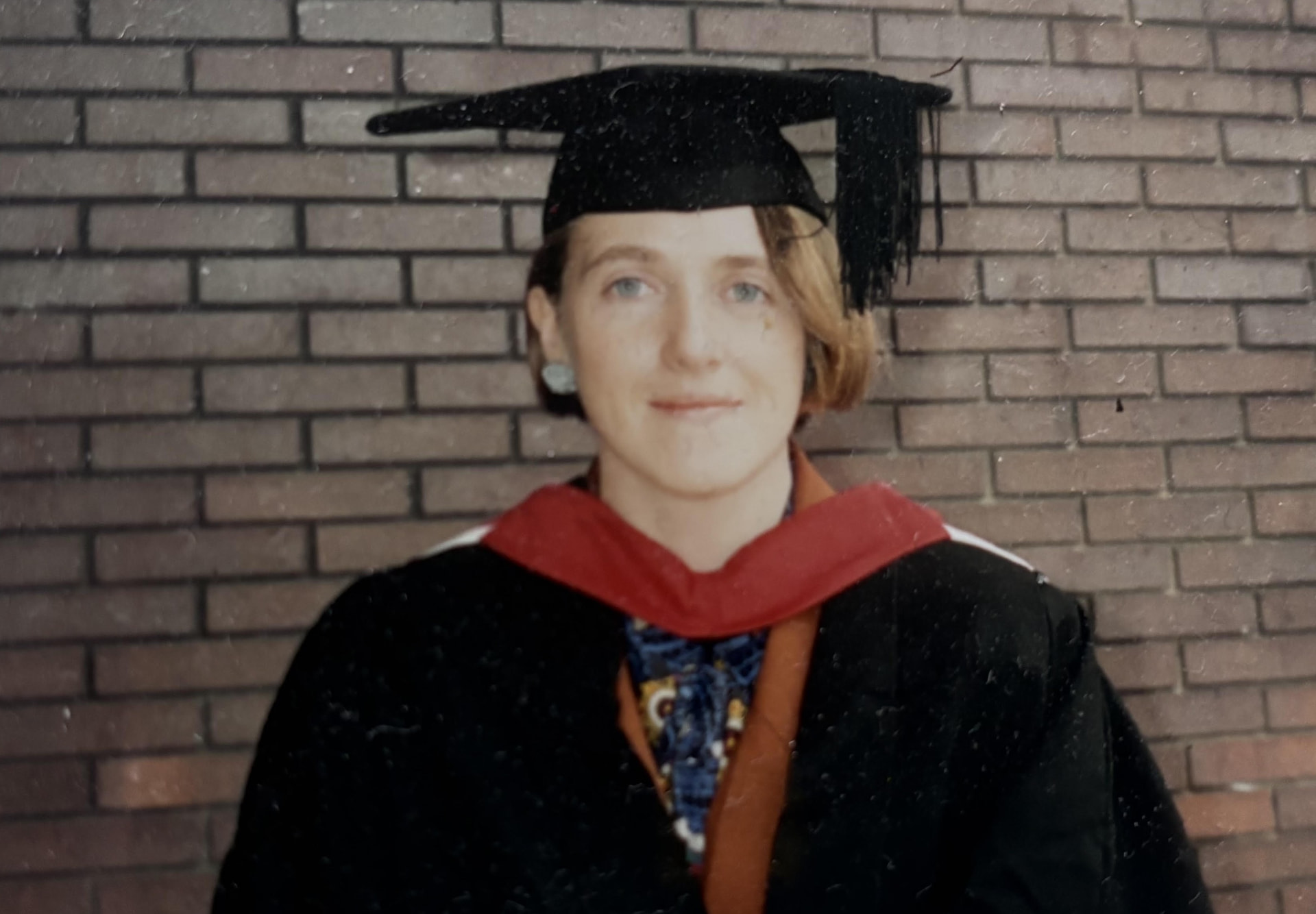
From a very, very poor background, with no advantages and no contacts, I somehow managed to build a life that shouldn't have been statistically possible. I got a first-class degree. I did a master's at Cambridge. I learned French fluently. By the age of 22 I was assistant editor of a magazine. Nobody handed me any of that, and nobody medicated me into it either.
At university, I used to record my notes and then write them up 10 to 20 times, over and over again, to get the knowledge into my head. It wasn't easy. No one was lowering standards in those days - you just had to learn sh*t. The university did, however, give me a route in by letting me do a foundation degree without A Levels.
But I want to be clear about what I'm not saying. I am not saying medication is wrong. For some people, at some times, it is genuinely life-changing, and if your child has been prescribed something you should no more tear up the prescription because of a TV programme than you should fill it because a celebrity endorsed it. What I am saying is that medication is not the only tool, and it should never be the first and only answer to a child who can't sit still.
The third way: strategies, not suppression
The thing that saved me was that somewhere along the line - through luck, stubbornness and a few people who saw past the fidgeting - I learned to build strategies. Not to cure ADHD, because you don't cure it, but to work with a brain that hunts novelty, and to give that brain the structure it was never going to invent for itself.
I wrote everything down, because if it wasn't written down it didn't exist. I broke enormous tasks into comically small ones, because a blank page was terrifying but a list of ten five-minute jobs was just a to-do list. I turned studying into games and races against the clock. I exercised ferociously, because a brain that has been properly physically tired is a brain that can finally sit still. I learned that deadlines and external accountability were my friends, and that I should deliberately engineer them into every commitment I made. None of this was taught to me by a clinician. It was built by trial, error and thousands of small experiments on myself.
The tragedy is that it took me until adulthood to work all of this out, and it shouldn't. A child with ADHD tendencies who is taught these strategies at eight has an entirely different life ahead of them from one who is simply sedated into compliance or expelled into failure.
What if schools were built for these brains?
This is where I think Pemberton is pointing at something real, even if the programme didn't land it. We keep asking: medication or nothing? Punishment or prescription? It's a false choice. There is a third way, and it looks like new schools designed from the ground up to understand neurodivergence - schools where movement breaks are built into the day rather than confiscated, where executive function skills are taught as explicitly as maths, where a child who can't focus for an hour is coached to focus for ten minutes and then twenty, where fidgeting isn't a discipline issue but information.
Imagine what a generation of ADHD kids could achieve if, instead of a chemical cosh or the old-school cane, they were handed the strategies I had to spend twenty years inventing for myself. A first-class degree is not the prize - a life without the constant, corrosive sense of being the problem child is the prize. Everything else follows from that.
If any of this resonates - if you have ADHD, or you're raising a child who does, and you've found strategies that genuinely work - please share them in the forum. That's exactly what this site is for: parents passing each other the tools we had to find the hard way.
Strategies that carried me
If it isn't written down, it doesn't exist
Working memory is the first casualty of an ADHD brain. One capture system - a notebook, one app, one place - checked daily, beats six half-used systems every time.
Shrink the task until it's boring
A blank page is paralysis; a five-minute job is nothing. Break every intimidating task into pieces so small they feel trivial, then start with the silliest one.
Turn it into a game or a race
The ADHD brain is a novelty hunter. Timers, challenges, beat-your-own-record revision - it sounds childish, but it's how I got a first. Lean into it rather than fighting it.
Exercise is not a break from work, it is the work
Nothing regulated my focus like hard physical exercise. Twenty minutes of genuine intensity before study sessions was worth more than any amount of staring at the page.
Engineer accountability before you need it
Deadlines set by other people work when self-imposed ones don't. Study groups, tutors, telling someone your plan out loud - build the external structure your brain won't provide.
Teach these to your child early
I had to invent all of this in my twenties. Sit with your child and build their version of these systems together, now - it's the single most useful thing you can give them.
Join the conversation
Head to the forum to discuss this and other topics with parents in the same boat.
Visit the forumDiscuss this blog
Replies
Join the conversation
Sign in with Google to post a reply.